Ordering a standard SMT nozzle is usually simple: identify the machine brand, head type, and nozzle part number. Choosing a custom SMT nozzle manufacturer is different. The customer may know only that a component is difficult to pick, the original tooling is unavailable, or the existing solution is unstable.
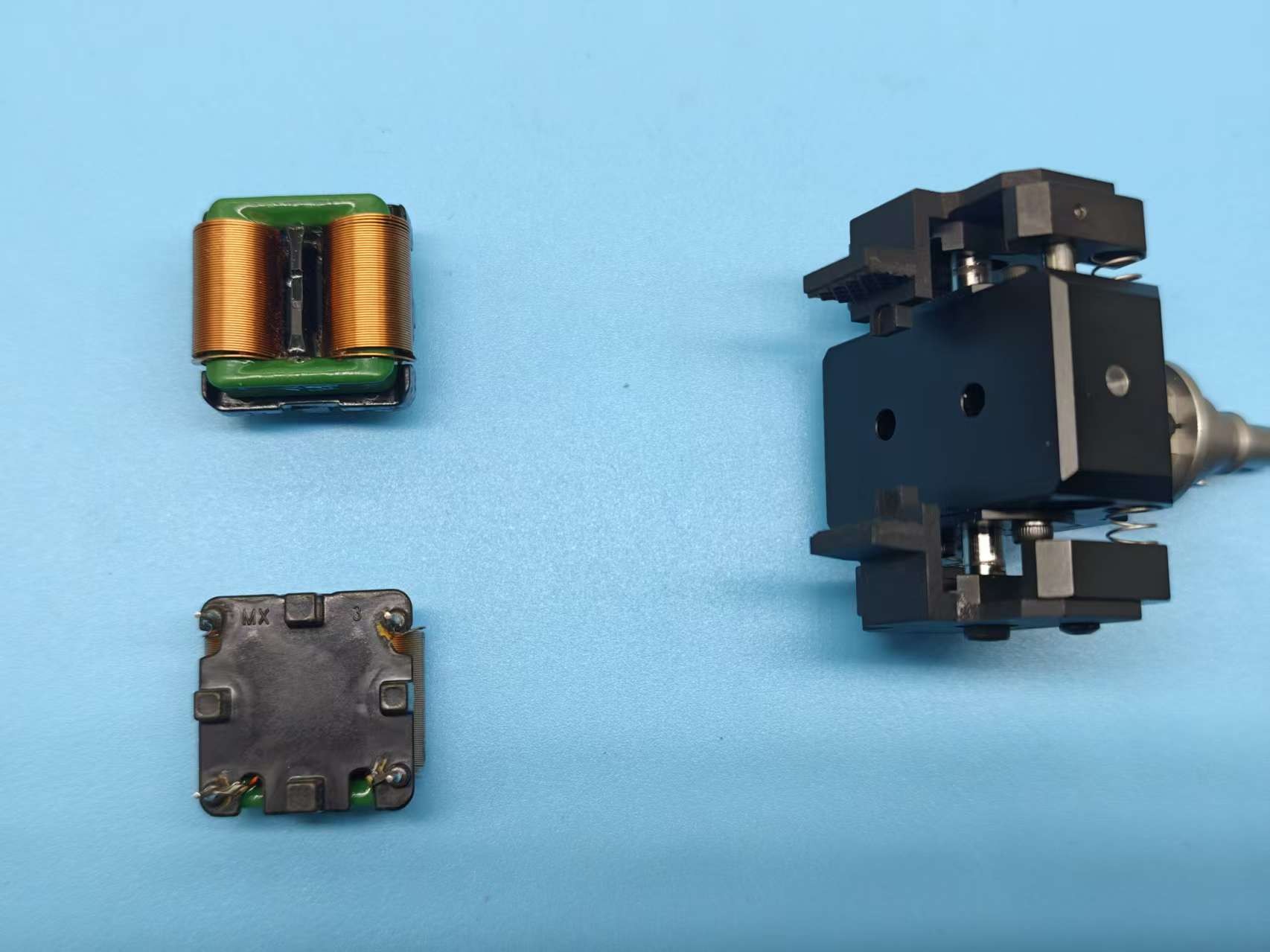
A reliable project connects three sets of information: the component, the machine, and the process. A useful custom nozzle RFQ answers three questions: What are we handling? What machine must handle it? What exactly is going wrong today?
1 Start With the Component Package

Prepare clear top, bottom, and side photos, a dimensional drawing if available, and a physical sample when practical. Include:
- Length, width, height, and weight.
- Lead or terminal position.
- Allowed contact area and surfaces that must not be touched.
- Required pickup orientation.
- Fragile, soft, optical, adhesive, or sensitive features.
This information helps the supplier choose conventional vacuum, a modified vacuum tip, multiple suction points, soft contact, or mechanical gripping.
2 Provide Exact Machine-Side Information
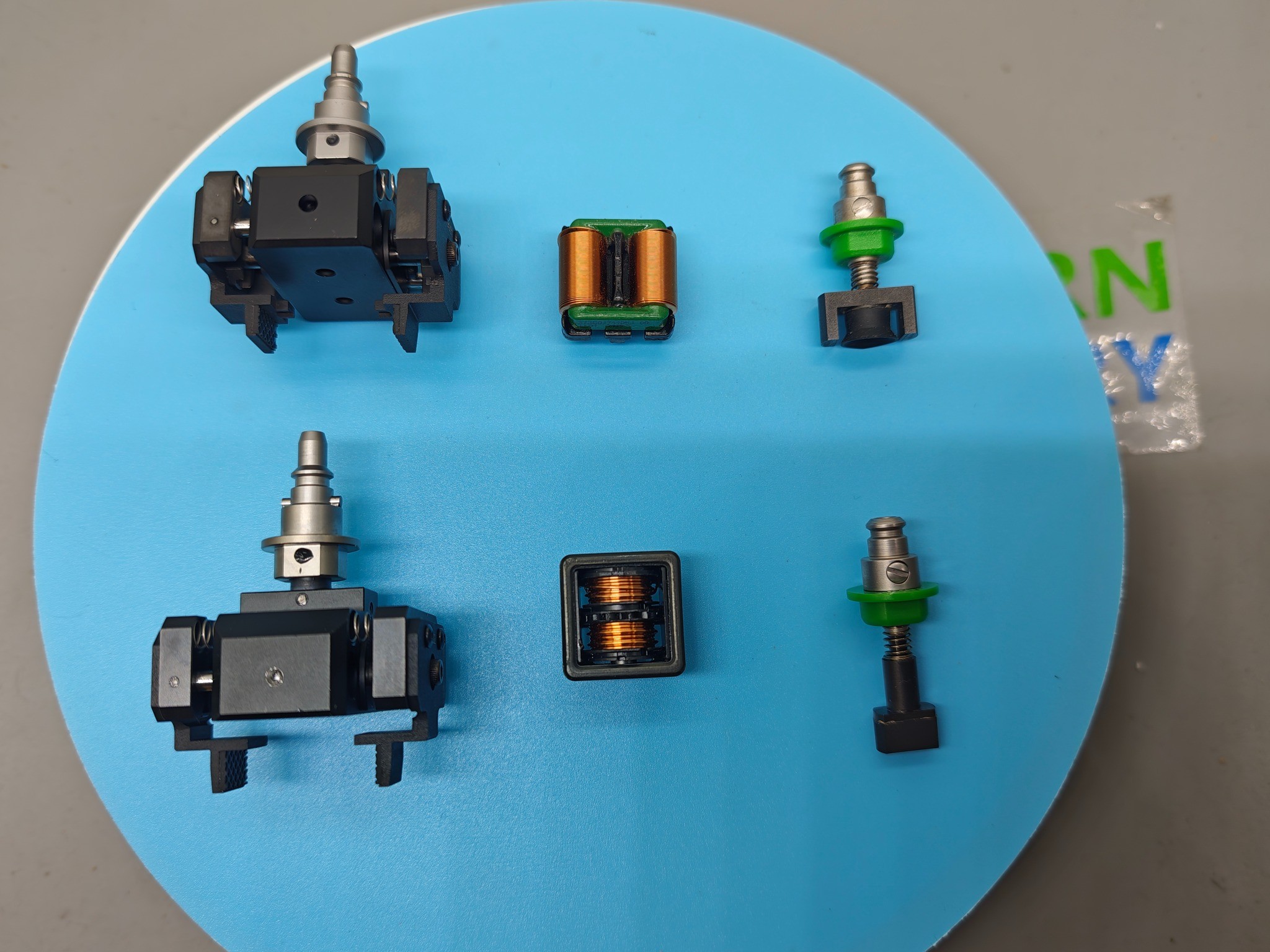
“JUKI nozzle” or “Panasonic nozzle” is often not specific enough. Different machines and placement heads may use different interfaces, tool-changing methods, clearances, and operating parameters. Provide:
- Machine brand and exact model.
- Placement-head model or head type.
- Existing nozzle part number and interface photos.
- Available vacuum or pneumatic actuation.
- Tool-change and clearance requirements.
An old nozzle or interface sample can reduce ambiguity and accelerate development.
3 Explain the Production Problem in Observable Terms
Avoid saying only “the nozzle does not work.” Describe the failure mode:
- The component cannot be picked.
- It drops during pickup or movement.
- It rotates or tilts in the nozzle.
- Vacuum is unstable or cannot form a seal.
- The nozzle touches or damages leads or sensitive surfaces.
- Feeder or tray presentation is inconsistent.
- Pickup works, but placement or release is unreliable.
A short video of the failed pickup often communicates the sequence, orientation, presentation, and movement better than a long explanation.
4 Expect Measurement and Engineering Review

Custom tooling should not be based on appearance alone. Critical dimensions, clearances, contact regions, and machine-side features need to be measured and documented. If no drawing exists, a project can often begin with a physical component sample, old nozzle, interface photographs, and machine information.
5 Select the Simplest Suitable Pickup Method
- Standard nozzle: preferred when a standard tip meets the requirement.
- Customized vacuum tip: useful when a suction surface exists but requires another profile or size.
- Multi-hole vacuum design: distributes suction over a larger or unusual area.
- Soft-contact tip: may protect delicate surfaces or improve sealing.
- Mechanical gripper: useful when side gripping is possible but stable vacuum pickup is difficult.

6 Require a Prototype and Validation Path
Design → Prototype → Bench Pickup Test → Machine Test → Optimization → Repeated-Cycle Validation → Production Release

A bench test can show that the tool physically engages and holds the component. Machine validation is still required for repeatability, placement accuracy, cycle time, vision, release, collision clearance, and long-term behavior.
7 Define Success Before Final Production
“It works” is too vague. Agree on practical acceptance criteria: successful pickup and release, repeat cycles, orientation stability, no visible damage, machine compatibility, placement repeatability, and acceptable cycle time. High-speed or high-volume applications may require more extensive repeated-cycle testing.
8 Evaluate the Supplier Beyond Unit Price
A poorly designed nozzle can create line stops, repeated adjustment, damaged components, and lost engineering time. Evaluate:
- Engineering understanding of the component and machine interface.
- Prototype and pre-production test capability.
- Speed and control of design revisions.
- Repeatability of future production batches.
- Drawing, version, and part-identification control.
- Response time and support for urgent production issues.
Custom SMT Nozzle RFQ Checklist
| Category | Information to Provide | Why It Matters |
|---|---|---|
| Component | Photos, drawing, sample, L × W × H, weight, contact restrictions | Defines pickup or gripping geometry |
| Machine | Brand, model, head type, existing nozzle, interface photos | Defines mechanical compatibility |
| Process | Feeder or tray, pickup orientation, failure mode, speed requirement | Defines the actual handling problem |
| Validation | Test conditions, quantity, repeat-cycle expectation | Defines acceptance criteria |
| Commercial | Expected quantity, spare requirement, target timing | Supports quotation and production planning |
FAQ About Buying Custom SMT Nozzles
Can a nozzle be reverse engineered without a drawing?
Often yes, provided a physical nozzle or sufficiently complete interface data is available. Reverse engineering should include dimensional measurement and functional review rather than copying only the external appearance.
Should I send a drawing or a sample first?
Send both if possible. A drawing provides nominal dimensions, while a sample reveals real surfaces, tolerances, lead condition, and contact constraints.
Should purchasing or engineering lead the project?
Both are useful. Engineering should define process and validation requirements; purchasing should manage terms, quantity, lead time, and supply continuity.
Ready to Send a Custom Nozzle RFQ?
Prepare the component photos, drawing or sample, machine and head information, existing interface details, current pickup issue, target quantity, and validation requirement. Southern Machinery can evaluate a standard replacement, customized vacuum nozzle, or gripper solution.
Trademark note: JUKI is a trademark of its respective owner. References describe machine compatibility and application context and do not imply OEM manufacture or endorsement unless explicitly stated.