When manufacturers evaluate an automatic wire cutting and stripping machine, one of the first questions is usually: How much labor can this machine save?
It is an important question, but it is not the complete business case.
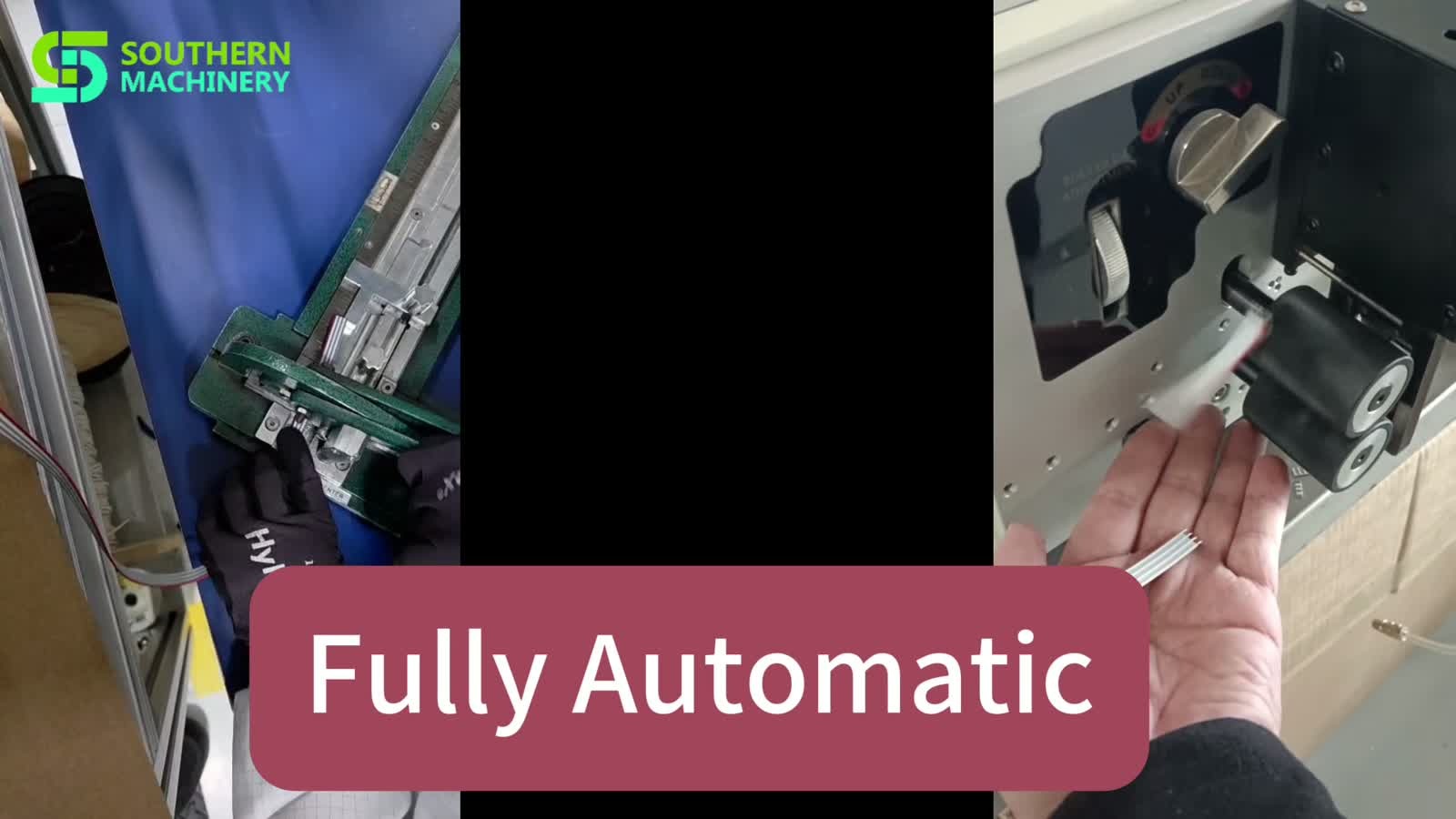
Manual wire preparation uses labor for measuring, positioning, cutting, stripping and inspection. At higher production volumes, these short operations accumulate into hundreds or thousands of hours. The same process can also limit capacity, consume extra cable and make production results more dependent on individual operators.
The more useful management question is:
How much is our current wire-preparation process costing each year?
From Several Manual Steps to One Controlled Process
A manual sequence often follows:
Measure → Position → Cut → Strip Front → Strip Rear → Inspect → Repeat
An automatic machine changes the sequence to:
Set Parameters → Feed → Measure → Cut → Strip → Output
The Southern Machinery S-3516 supports cutting lengths from 1 to 99,999.9 mm, front stripping from 0 to 80 mm and rear stripping from 0 to 50 mm. Its published output is 1,000 to 2,000 pieces per hour, depending on the wire and processing requirements.
A Simple Processing-Time Example
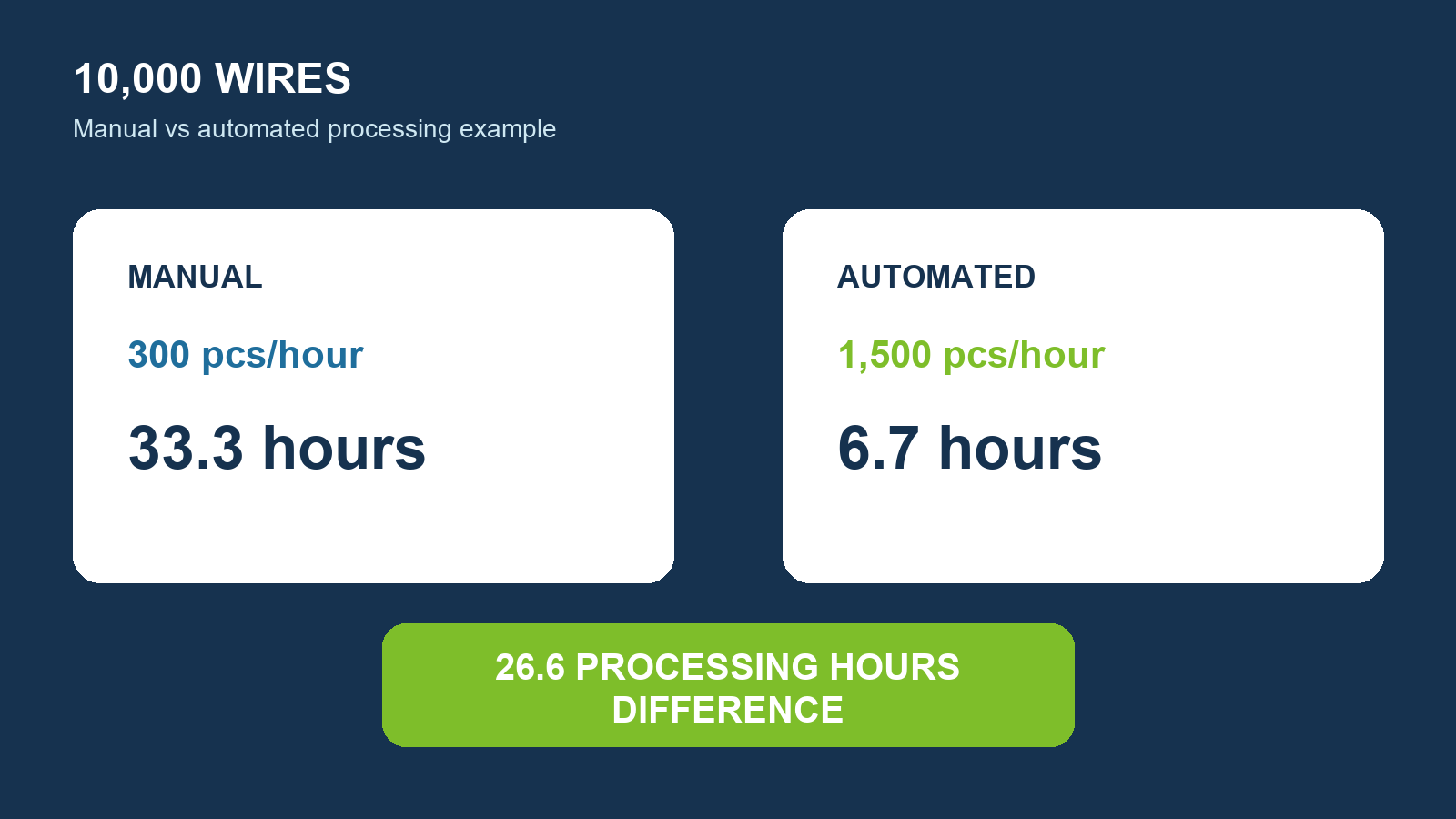
For 10,000 wires, a manual rate of 300 pieces per hour requires about 33.3 hours. An automated rate of 1,500 pieces per hour requires about 6.7 hours.
The difference is 26.6 processing hours for the same quantity.
This is an example calculation only. Actual output depends on the wire, feeding conditions, machine setup and required stripping geometry.
Capacity May Be More Valuable Than Headcount Reduction
Automation does not have to mean removing employees. In many growing factories, the bigger benefit is producing more with the existing team.
When demand rises, automated capacity may absorb part of the increase without requiring labor, workstations, training and supervision to expand at the same rate.
Cable Material Is Another Hidden Cost
Operators sometimes leave extra length to reduce the risk of a wire being too short.
At one million wires per year, an average excess of 5 mm equals 5,000 meters of cable. At USD 0.40 per meter, that represents USD 2,000 of potential annual material use.
This calculation is illustrative. The actual saving depends on the current process, cable price and achievable length control.
Build the ROI from Measurable Inputs
A useful evaluation should include:
- Annual labor-hour reduction
- Potential cable saving
- Reduced rework and scrap
- Avoided or delayed headcount growth
Payback months can be estimated as machine investment divided by annual quantifiable saving, multiplied by 12. Standardization, training and planning benefits should be recorded separately unless they can be supported with reliable data.
Evaluate Your Application
The S-3516 should be evaluated as a controlled wire-preparation process, not simply as a replacement for a hand stripper.
Send Southern Machinery your wire specification, daily quantity, cutting length, front and rear strip lengths, current output and local labor cost. We can help prepare a preliminary manual-versus-automation comparison.