Repetitive manual cutting and stripping raises three production concerns: direct interaction with hand tools, dependence on operator technique and a less standardized workstation.
Automation provides a practical way to address these concerns.
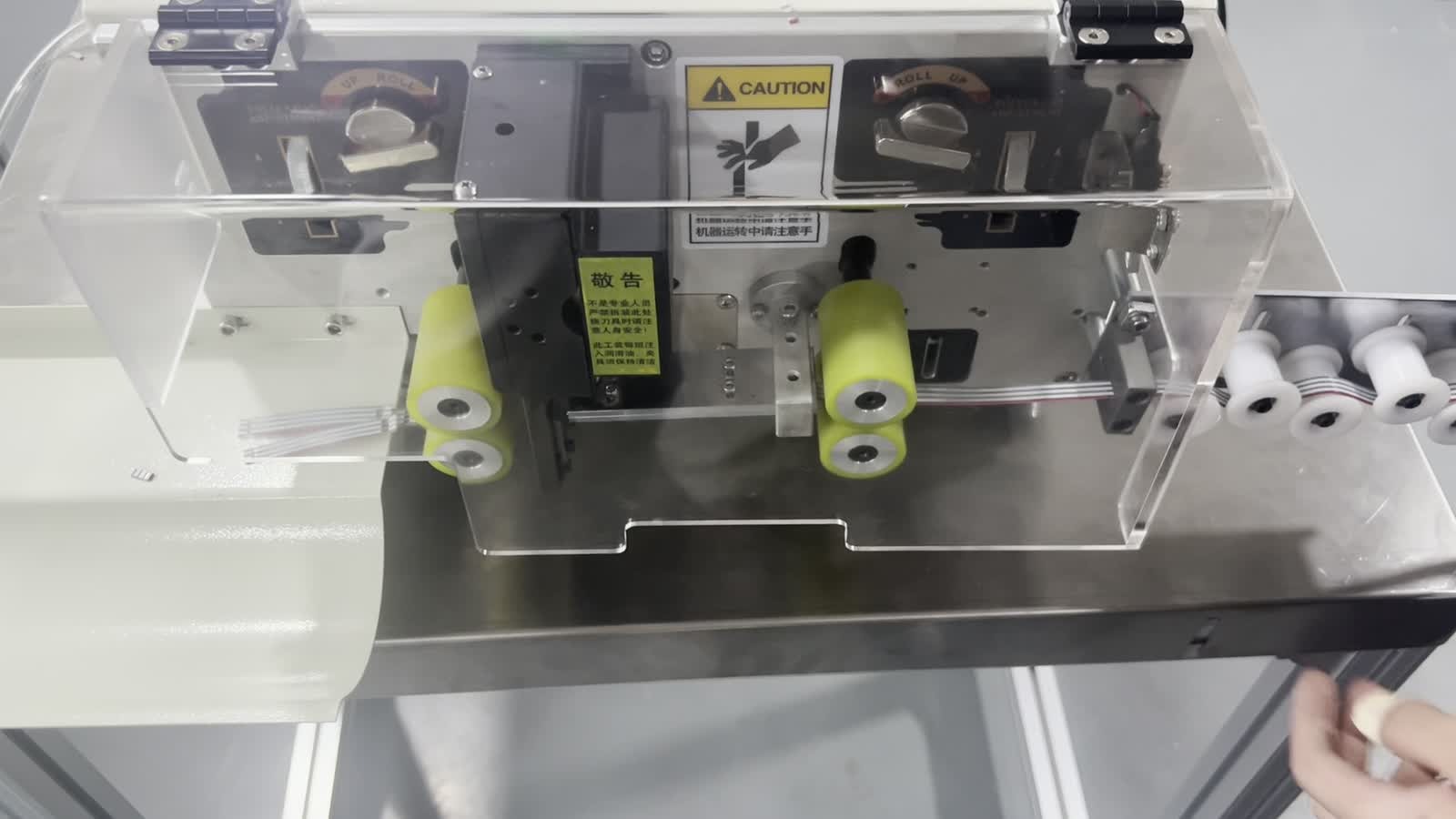
Reduce Direct Interaction with Cutting Tools
Manual processing requires repeated use of cutters, strippers and blades. In an automated machine, the cutting and stripping mechanism operates inside the equipment.
The supplied S-3516 test material also demonstrates a protective guard and interlock test.
The appropriate safety claim is limited: guarding and interlock functions can reduce direct operator exposure to the cutting mechanism during normal operation. They do not replace training, risk assessment, maintenance procedures or local safety requirements.
Move from Technique to Standard Work
A traditional station may rely on:
Ruler + Cutter + Stripper + Operator Experience
An automated station combines:
Machine + Defined Parameters + Guarding + Operating Procedure
The result is a more repeatable wire-preparation workstation.
Support 5S at the Workstation
Sort
Remove unnecessary manual tools from the station.
Set in Order
Create a dedicated feeding, processing and collection area.
Shine
Keep the machine and work area clean for inspection and maintenance.
Standardize
Use defined settings, setup checks and operating instructions.
Sustain
Train operators and audit the process regularly.
The Objective Is Bigger Than Stripping Speed
The objective is not simply to strip faster. It is to create a more controlled and organized wire-preparation process.
This can support process consistency, operator training, workstation organization and production standardization.
Send Southern Machinery your wire specification, production drawing or physical samples for application evaluation.