PCB fixture material affects dimensional stability, rigidity, machinability, ESD behavior, temperature resistance, wear, weight and service life. Geometry alone does not determine whether an SMT carrier will work reliably; material, thickness, structure and process load must be engineered together.
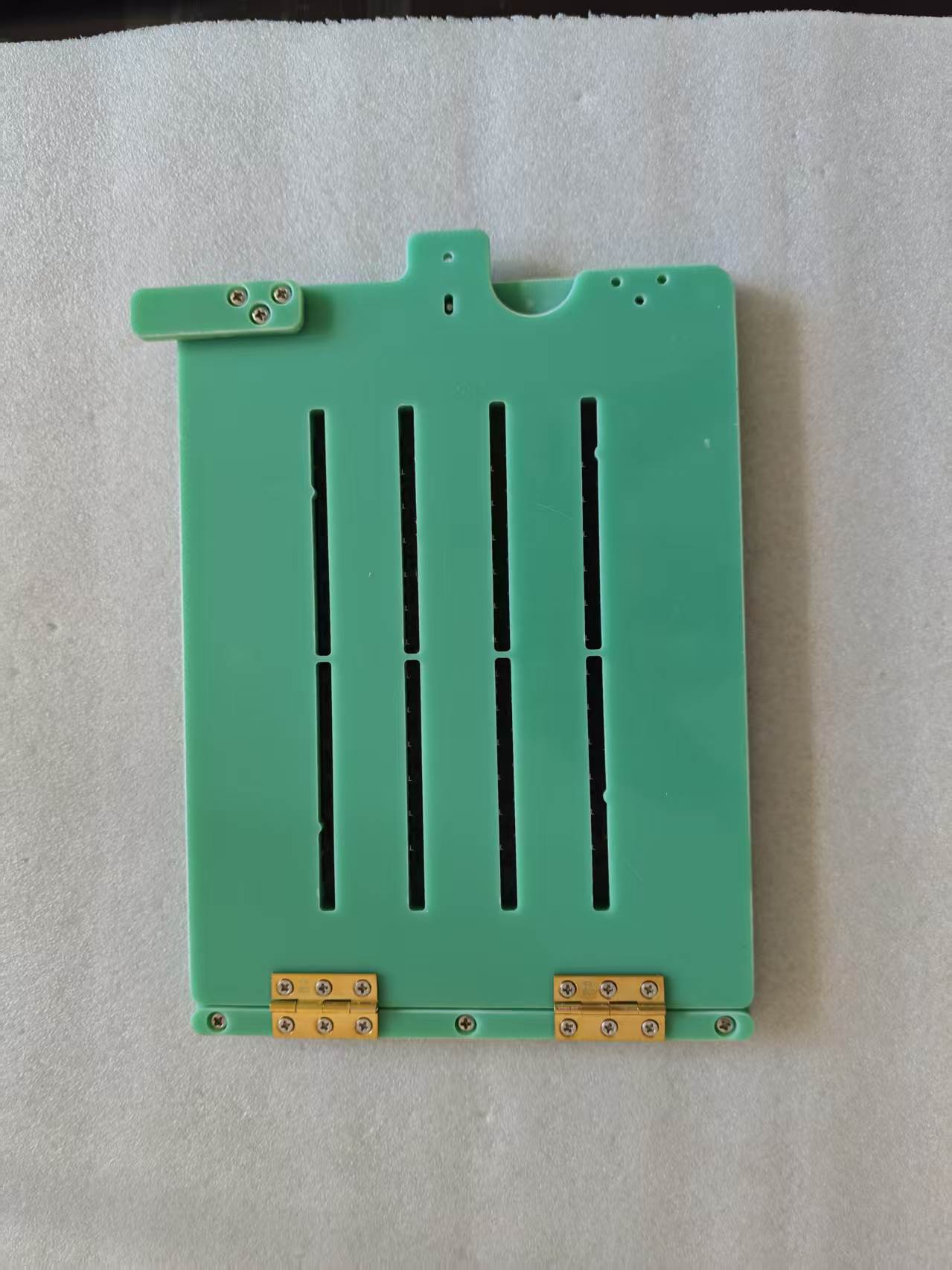
Which Material Is Best for a PCB Fixture?
There is no universal best material. The correct choice depends on the process:
- General FR4 or glass-fiber laminate: useful for many room-temperature positioning, assembly, inspection and prototype fixtures.
- ESD-safe composite: selected when verified static-dissipative behavior is required around sensitive electronic assemblies.
- High-temperature tooling material: selected for repeated exposure to reflow-adjacent, wave-soldering, selective-soldering or other heated processes.
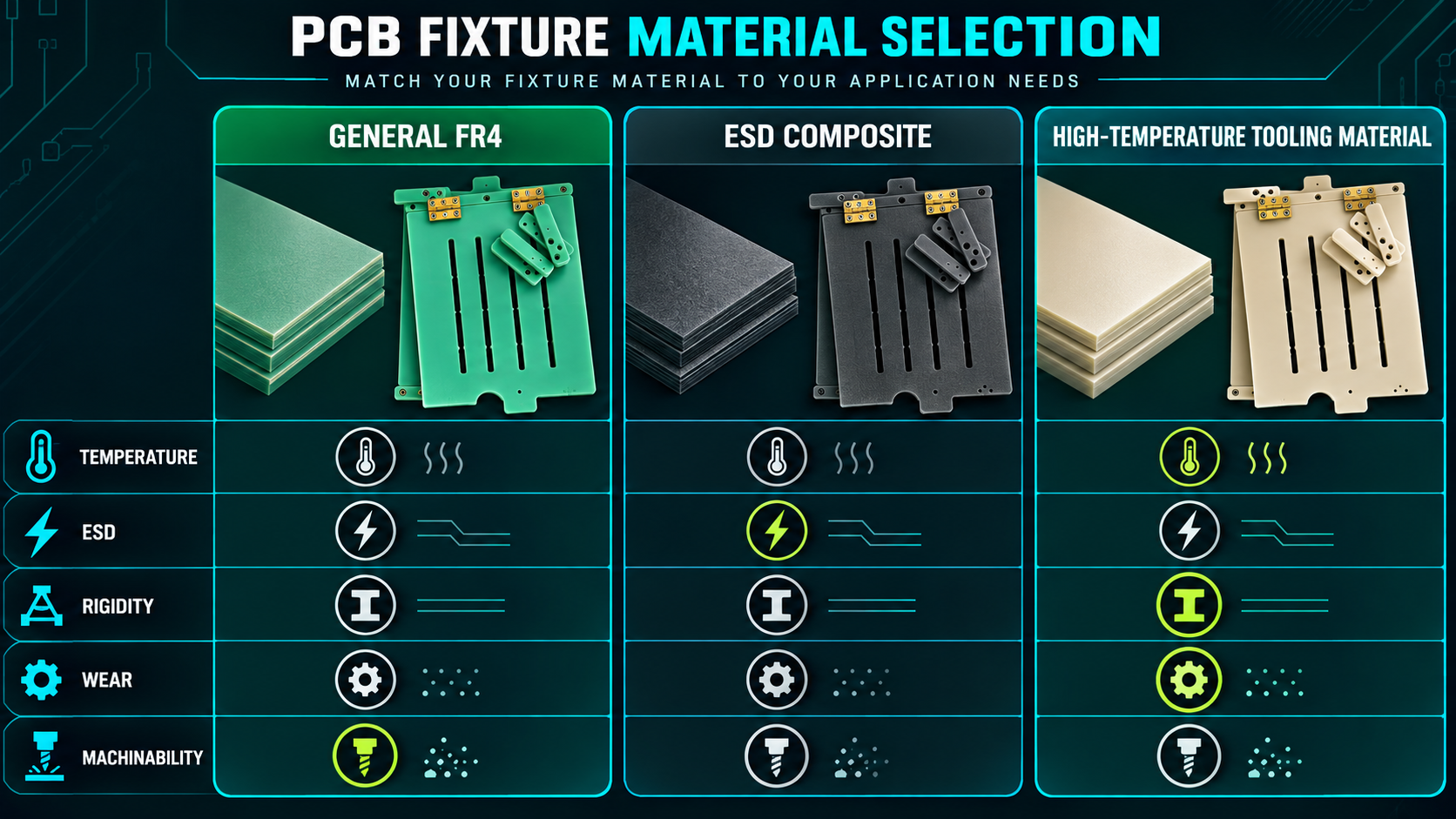
This infographic is a selection framework, not a grade specification. Actual electrical, thermal and mechanical values must come from the chosen material's datasheet.
FR4 and Glass-Fiber Laminates
FR4-type material is familiar in electronics manufacturing and can be CNC-machined into pockets, slots and locating features. It may be appropriate for general fixtures where temperature and ESD requirements are moderate.
However, “FR4” alone is not a complete specification. Grades vary in resin system, glass content, thickness tolerance, surface finish and thermal behavior. The supplier should confirm the exact grade against the operation.
ESD-Safe Composite Materials
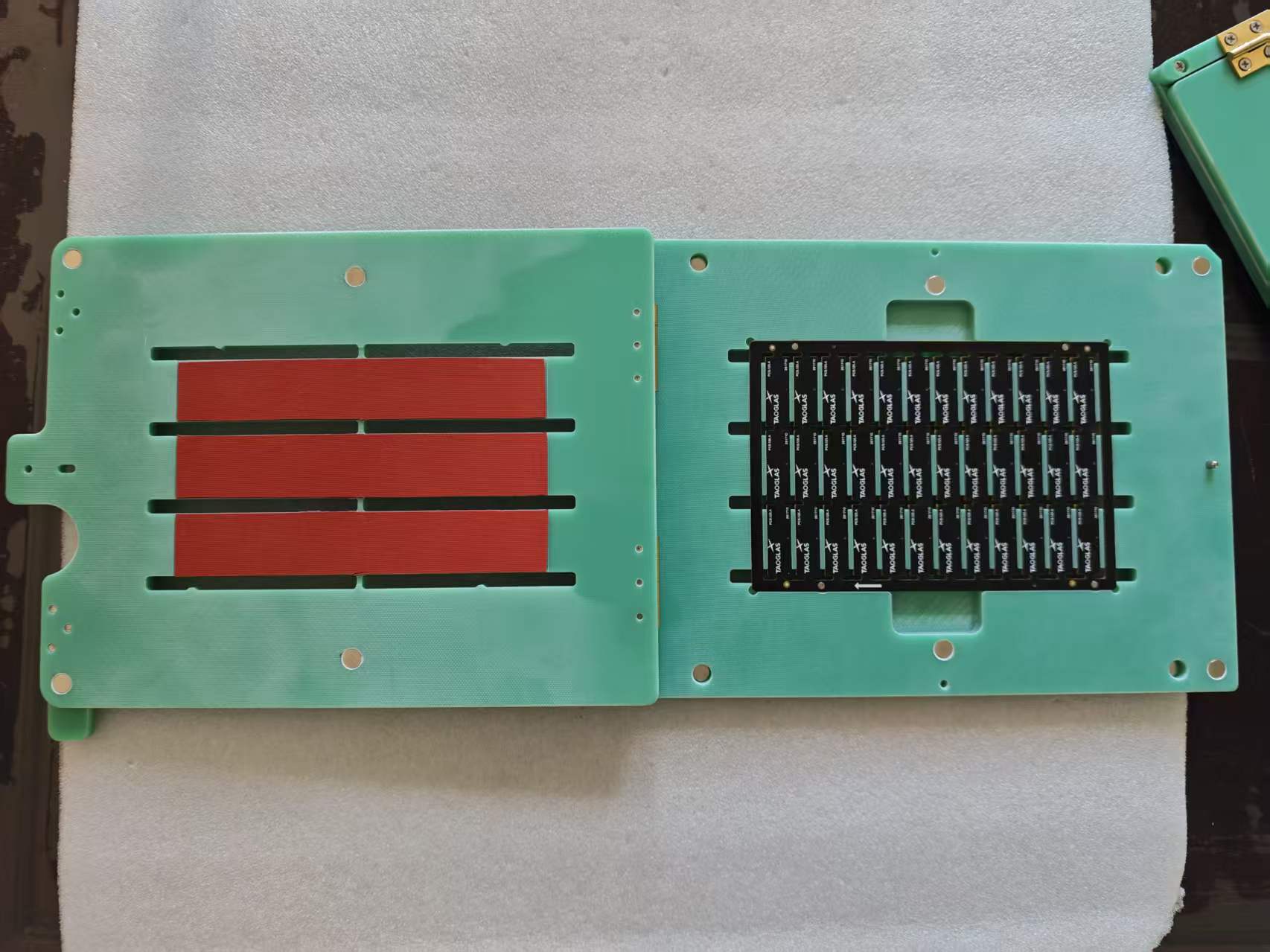
An ESD PCB fixture is intended to control static risk when it contacts sensitive boards or components. Color is not proof of ESD performance: a green plate may be ordinary laminate, while an ESD composite may be black or another color.
Specify the required electrical behavior and verification method. Surface resistance, volume resistance, grounding strategy and the customer's ESD control plan may all matter. “ESD-safe” should be supported by material data rather than appearance.
High-Temperature Tooling Materials
Fixtures used near soldering or other heated processes experience more than a single peak temperature. Repeated thermal cycles can affect flatness, dimensions, surface condition and lifetime. Confirm process temperature, exposure duration, cooling conditions and expected cycles before selecting a grade.
A material suitable for room-temperature assembly is not automatically suitable for wave soldering or repeated high-temperature production.
Material, Hardware and Modular Features
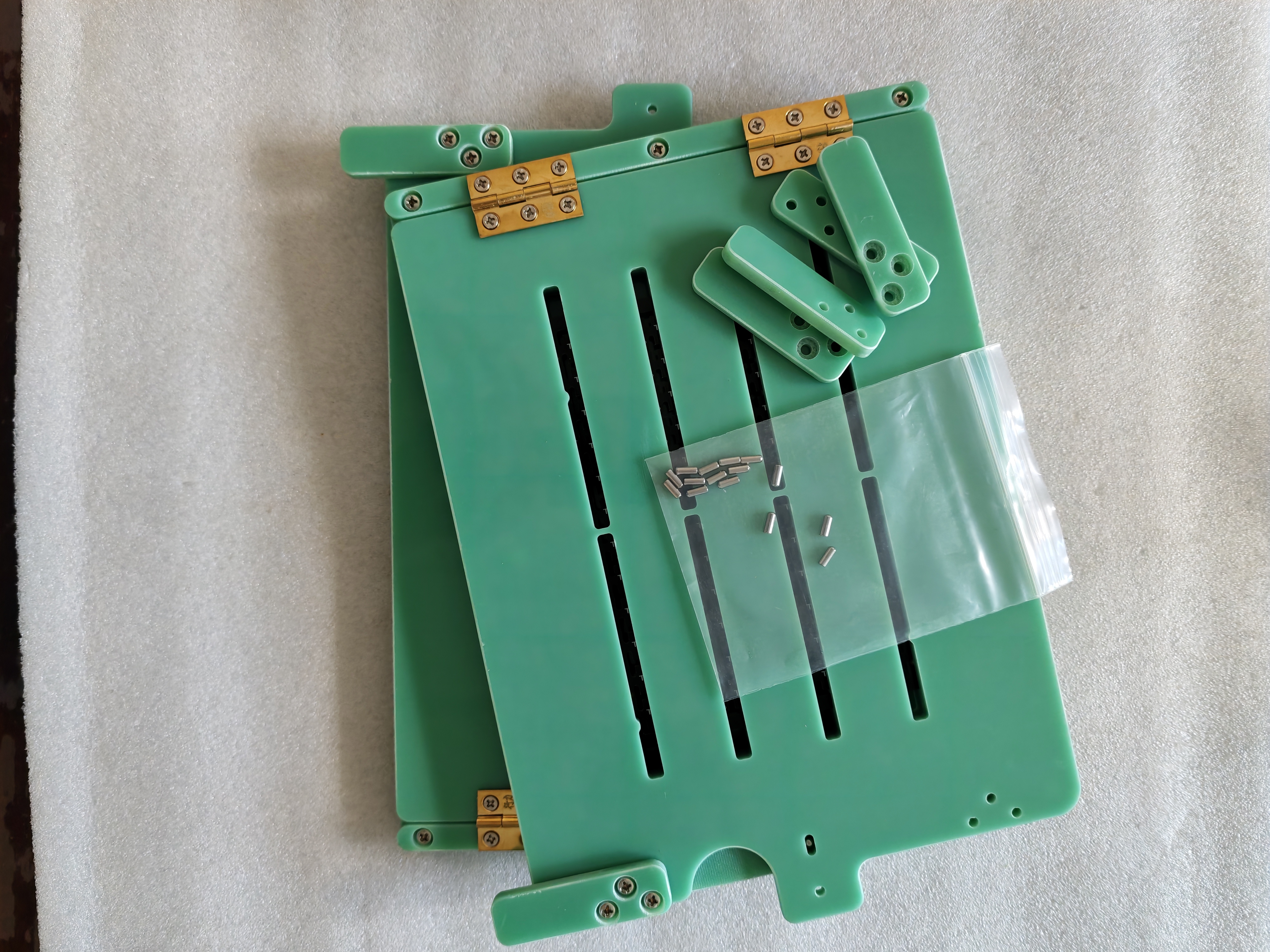
The real fixture shown here combines machined green plates with screws, brass-colored hinges, metal pins and removable locating blocks. These details matter because a production fixture is a mechanical system, not only a flat sheet of green material.
Replaceable pins or blocks can simplify maintenance in high-use areas. Hinges and fasteners also introduce local loads, so their mounting zones need sufficient thickness and edge distance.
Why CNC Machinability Matters
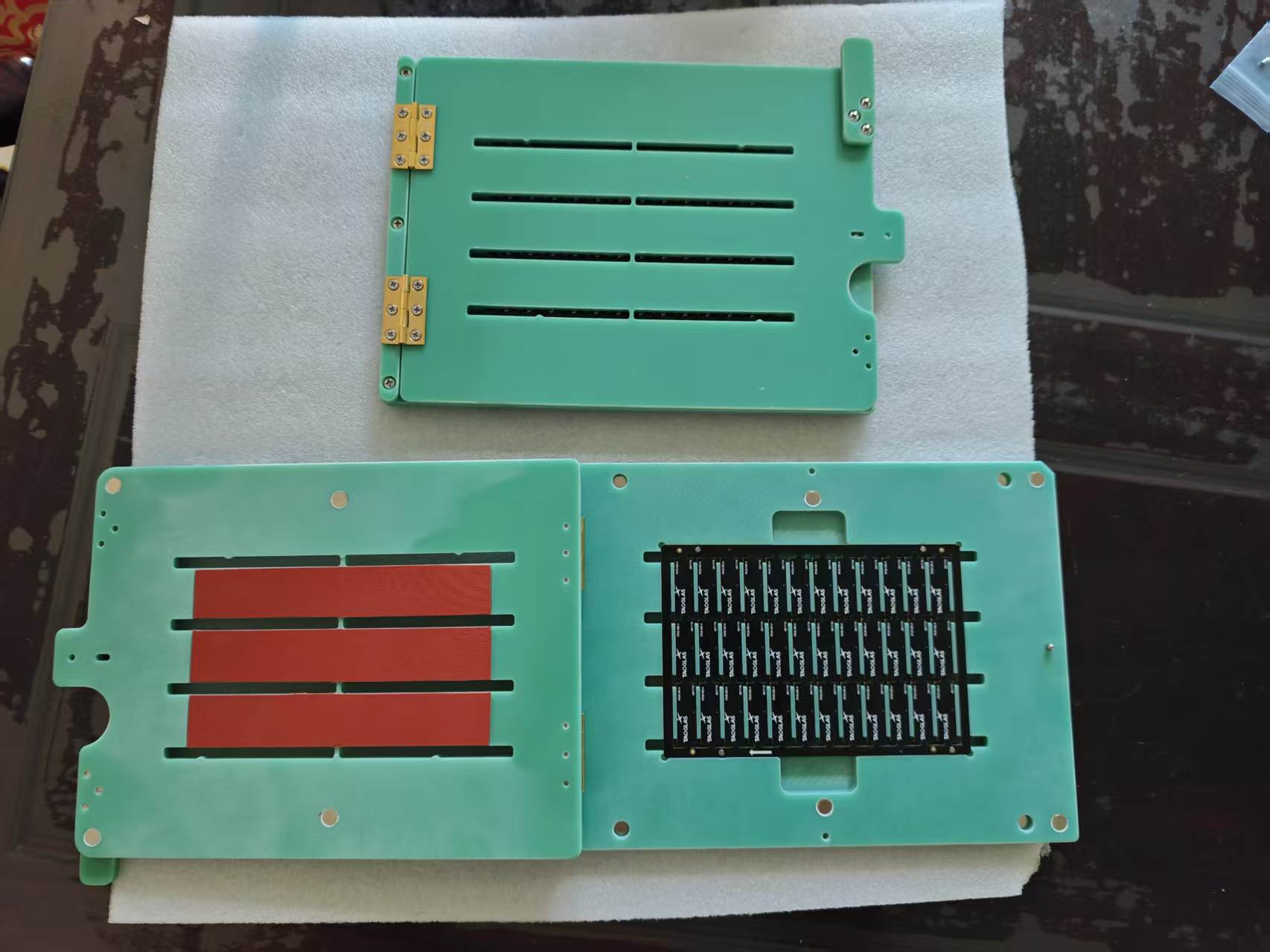
Machinability affects edge quality, hole accuracy, tool wear and the practicality of complex pockets. Important CNC features may include:
- PCB pockets and edge stops
- Locating-pin bores
- Long access or weight-reduction slots
- Component relief areas
- Clamp and hinge mounting holes
- Router cutting clearance
Accuracy is most critical at locating references. Cosmetic areas do not need the same tolerance as pin holes or machined datums.
Rigidity, Thickness and Fixture Geometry
Thickness increases stiffness, but it also increases weight, cost and the risk of interfering with components or machine interfaces. Openings reduce mass and provide access, yet too much removal can weaken the structure.
The engineering relationship is:
Material + Thickness + Geometry + Process Load = Fixture Performance
For depaneling, rigidity and cutting clearance may dominate. For inspection, repeatable positioning may dominate. For soldering, temperature and chemical resistance may dominate.
PCB Fixture Material Selection Checklist
| Input | Why it matters |
|---|---|
| PCB size, weight and thickness | Defines structural demand and locating method |
| Components and keep-out zones | Controls support and relief geometry |
| Process temperature and time | Screens thermal suitability |
| ESD requirement | Defines electrical material behavior |
| Machine interface | Limits outside dimensions and thickness |
| Expected cycles | Influences wear and replaceable-feature design |
| Cleaning chemistry | Affects surface compatibility |
| Tolerance requirement | Guides material stability and machining strategy |
Frequently Asked Questions
Does a green PCB fixture automatically provide ESD protection?
No. Color does not establish static-dissipative performance. Request the material grade and its verified electrical properties.
Is thicker always better?
No. Additional thickness can improve rigidity but may add weight, cost and interference. Thickness should be calculated with geometry, supports and process load.
Can FR4 be used for high-temperature fixtures?
Only when the exact grade's published thermal capability matches the real temperature, duration and cycle count. A generic FR4 description is insufficient.
What causes locating accuracy to degrade over time?
Wear at pins, pockets, edges and clamp points; material deformation; thermal cycling; loose hardware; and contamination can all reduce repeatability.
Select Material from the Process, Not the Color
Southern Machinery evaluates the PCB, components, process, machine, temperature, ESD requirement and production volume before recommending a fixture structure and material.
Learn how PCB files and process requirements become a custom production fixture.
Southern Machinery — Custom SMT PCB Fixtures & Production Tooling
Visit SMTHELP